At a glance
- The Canal Ring suits most first visits; the Museum Quarter is the calmer choice and has a direct airport bus, the 397.
- Tourist tax in 2026 is 12.5% of the room price before VAT. The city executive's 2027 budget proposal raises it to 16%.
- Schiphol to Amsterdam Centraal takes 14 to 17 minutes by train; Schiphol to Amsterdam Zuid, for De Pijp by metro, takes 6 to 7.
- Homes in the Jordaan, the western and southern canal belt and the Oude Pijp can be let to tourists for only 15 nights a year, so look for hotels there.
- Drinking alcohol and smoking cannabis in the street are banned in the city centre, with fines of €100 to €650.
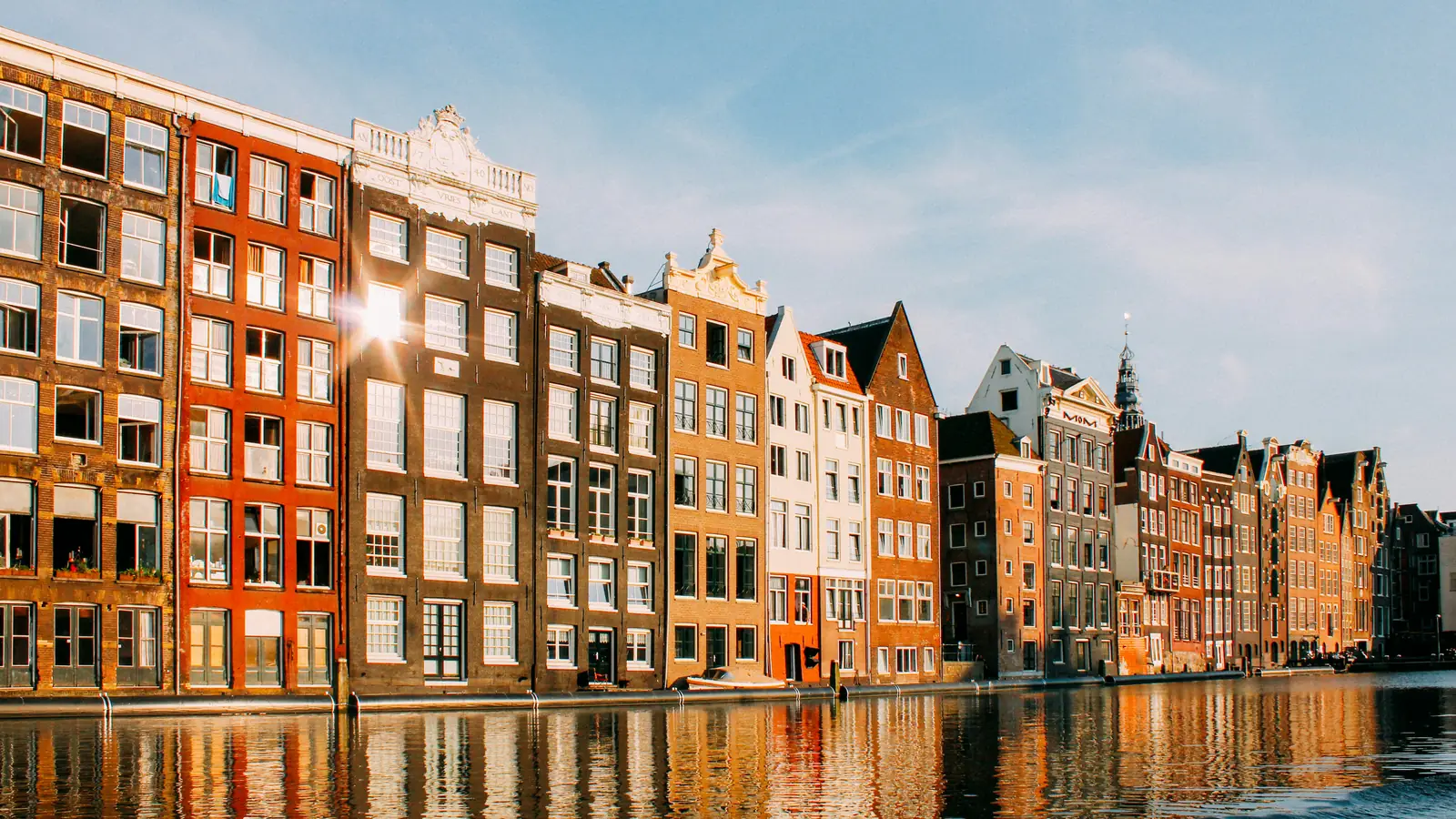
The right answer to where to stay in Amsterdam depends on what you want outside the front door. The Canal Ring and the Jordaan put the postcard city on your doorstep. The Museum Quarter and De Pijp are calmer and a short tram or metro ride from the canals. Noord and Oost trade canal views for space. Every area below is within about 20 minutes of the centre by tram, metro or ferry, according to the city’s own visitor site, so the real differences are noise, room size and the route in from Schiphol. This guide compares eight areas, then works out what the tourist tax adds to a bill in 2026 and 2027.
Which area of Amsterdam is best for a first visit?
The Canal Ring, for most people. You can walk to Dam Square, the Anne Frank House and the Nine Streets, and Centraal Station is a walk or a short tram ride away. If you would rather have quiet nights, choose the Museum Quarter. You can compare hotels in Amsterdam across all eight areas in one search.
Here are all eight side by side. Travel times to the centre come from I amsterdam, the city’s visitor site; the last column is the simplest way in from the airport.
| Area | Best for | Trade-off | To the centre | Simplest route from Schiphol |
|---|---|---|---|---|
| Canal Ring and Nine Streets | First visits, walking everywhere | Small rooms, steep stairs, high rates | You are in it | Train to Centraal, then walk or tram |
| Jordaan | Couples, cafés, canal-side streets | Few large hotels | Beside the Canal Ring | Train to Centraal, then walk or tram |
| Old Centre and De Wallen | Late nights, the shortest walk from the station | Crowds and noise | You are in it | Train to Centraal, then walk |
| Museum Quarter and Oud-Zuid | Museums, families, quiet nights | A tram ride from the canals | About 20 minutes by tram | Bus 397 direct to Museumplein |
| De Pijp | Food, markets, a lived-in feel | Mostly small hotels | About 5 minutes by public transport | Train to Zuid, then metro 52 |
| Oud-West | Vondelpark, food halls, lower rates | No big sights on the doorstep | About 5 minutes by tram, 20 on foot | Bus 397 to Leidseplein, then tram or walk |
| Oost and De Plantage | Parks, the zoo, families | The far side of town from the Jordaan | 15 to 20 minutes by tram | Train to Centraal, then tram |
| Noord | Space, newer hotels, river views | A ferry or metro for every trip | 5 minutes by free ferry | Train to Centraal, then ferry or metro 52 |
Amsterdam’s neighbourhoods, area by area
Canal Ring and the Nine Streets
The 17th-century ring of canals is what most people picture when they book. The Nine Streets, a grid of small shops crossing the grandest canals, sit in the middle of it, and I amsterdam calls them one of the most photogenic neighbourhoods in the city. From here the main sights of the centre are a walk away, which is the whole argument for paying more. Booking sites rarely list the Nine Streets as an area, so use the map view and look between the Singel and Prinsengracht canals, from Raadhuisstraat down to Leidsegracht.
Canal houses are narrow, so rooms tend to be small, staircases are steep and lifts are not a given. Check both before booking if you have heavy luggage or limited mobility. Metro 52 stops at Rokin and Vijzelgracht on the eastern and southern edges, which helps on the way to Zuid station and the airport.
Jordaan
West of the main canals, the Jordaan is a former working-class district of narrow streets and smaller canals, now full of galleries, boutiques and cafés. The Anne Frank House stands on its eastern edge. It is quieter after dark than the old centre and still walkable from almost everything.
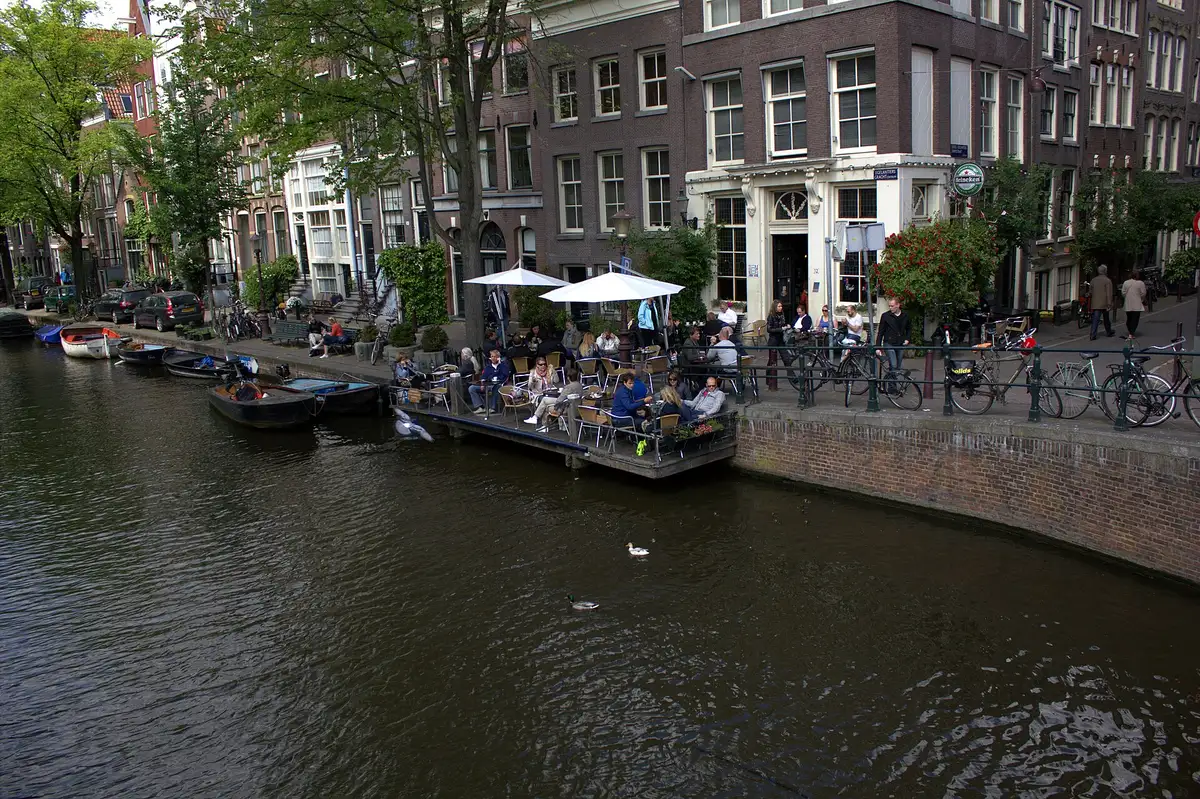
There are few large hotels here, and holiday rentals are being squeezed. Since 1 April 2026 a home in the Jordaan may be let to tourists for only 15 nights a year, half the citywide limit of 30. The same rule covers the Haarlemmerbuurt, the western and southern canal belt, De Weteringschans, Burgwallen-Nieuwe Zijde, Nieuwmarkt and the Oude Pijp. In all of them a hotel or licensed B&B is the realistic option.
Museum Quarter and Oud-Zuid
The Rijksmuseum, the Van Gogh Museum, the Stedelijk and the Concertgebouw all face Museumplein, with the Vondelpark a few minutes away. Oud-Zuid, the district around it, is described by I amsterdam as one of the most elegant and well-heeled parts of the city. Streets are wider and hotels larger than in the canal belt, and evenings are quiet.
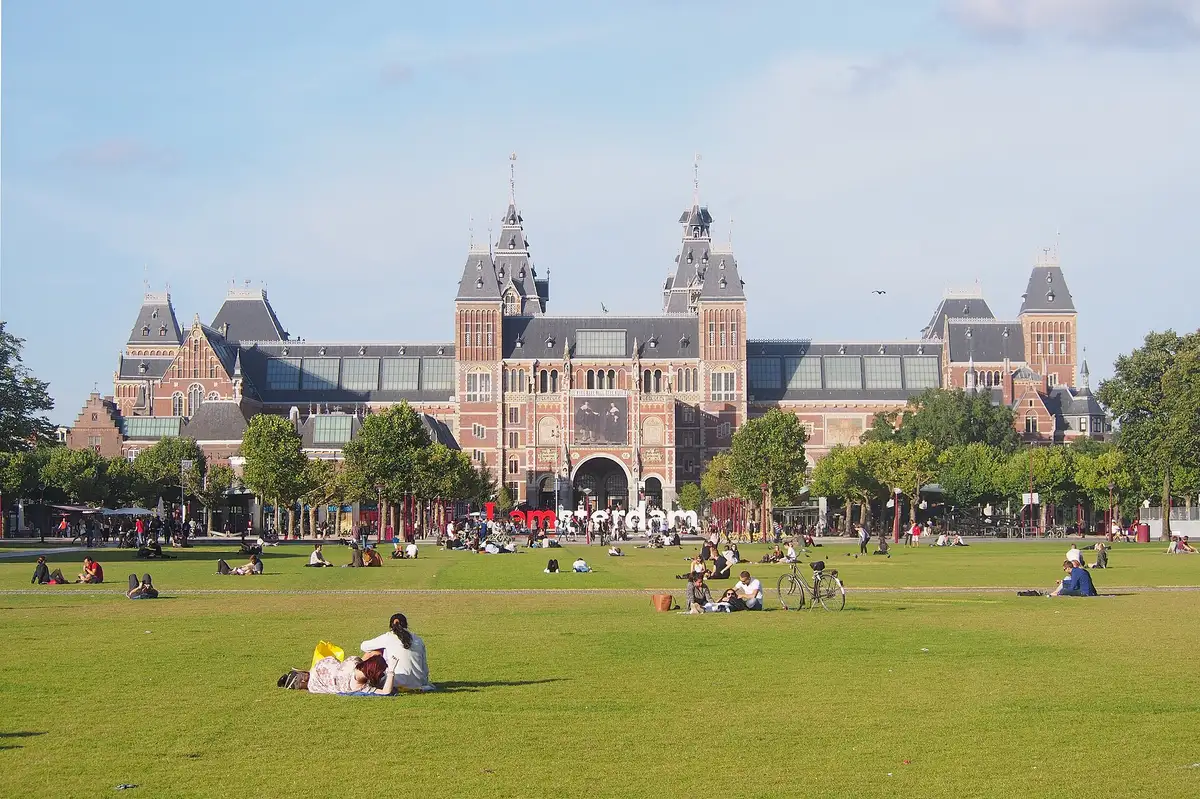
This is the easiest area to reach from the airport without a train: bus 397, the Amsterdam Airport Express, leaves Schiphol every 10 minutes and stops at Museumplein, the Rijksmuseum and Leidseplein. Tram 2 runs from Museumplein to Centraal in 16 minutes, by way of Leidseplein and Dam Square. You will take that tram, or walk about 40 minutes, every time you want the old centre.
De Pijp
South of the canal belt, De Pijp is a dense grid of terraced streets around the Albert Cuyp market and the Sarphatipark, with a café or restaurant on most corners. It suits people who care more about eating well than about a canal view. Hotels are mostly small.
De Pijp has the best airport link of any area that is not on the airport bus. Metro 52 stops at De Pijp station: Zuid is two stops south, and direct trains between Zuid and Schiphol take 6 to 7 minutes. Going north, the same line reaches Centraal. For an early flight home, that is hard to beat.
Oud-West
Oud-West lies between the Vondelpark and the Jordaan. Its draws are everyday ones: De Hallen, a converted tram depot with a food hall and cinema, the Ten Kate street market, and a long run of restaurants and music venues. I amsterdam puts it about five minutes from the centre by tram and 20 on foot. Choose it for lower rates within walking range of Leidseplein and the museums, and accept that the sights are somewhere else.
Oost and De Plantage
De Plantage, just east of the centre, is the green museum district: the Artis zoo, the Hortus Botanicus and the Jewish Museum are all here, about 15 minutes from the centre by tram or 20 on foot. Further out, Oost proper has wide 19th-century streets, the Oosterpark and street markets, and is about 20 minutes away by tram. Both suit families and repeat visitors. Neither is convenient for the Jordaan or the Anne Frank House, which are on the opposite side of the centre.
Noord
Noord is the former industrial bank of the IJ, across the water from Centraal Station. The EYE Film Museum and the A’DAM Tower face the station, and the old NDSM shipyard further west is now studios, festivals and cafés. Hotels here are generally newer and roomier than those in the old centre.
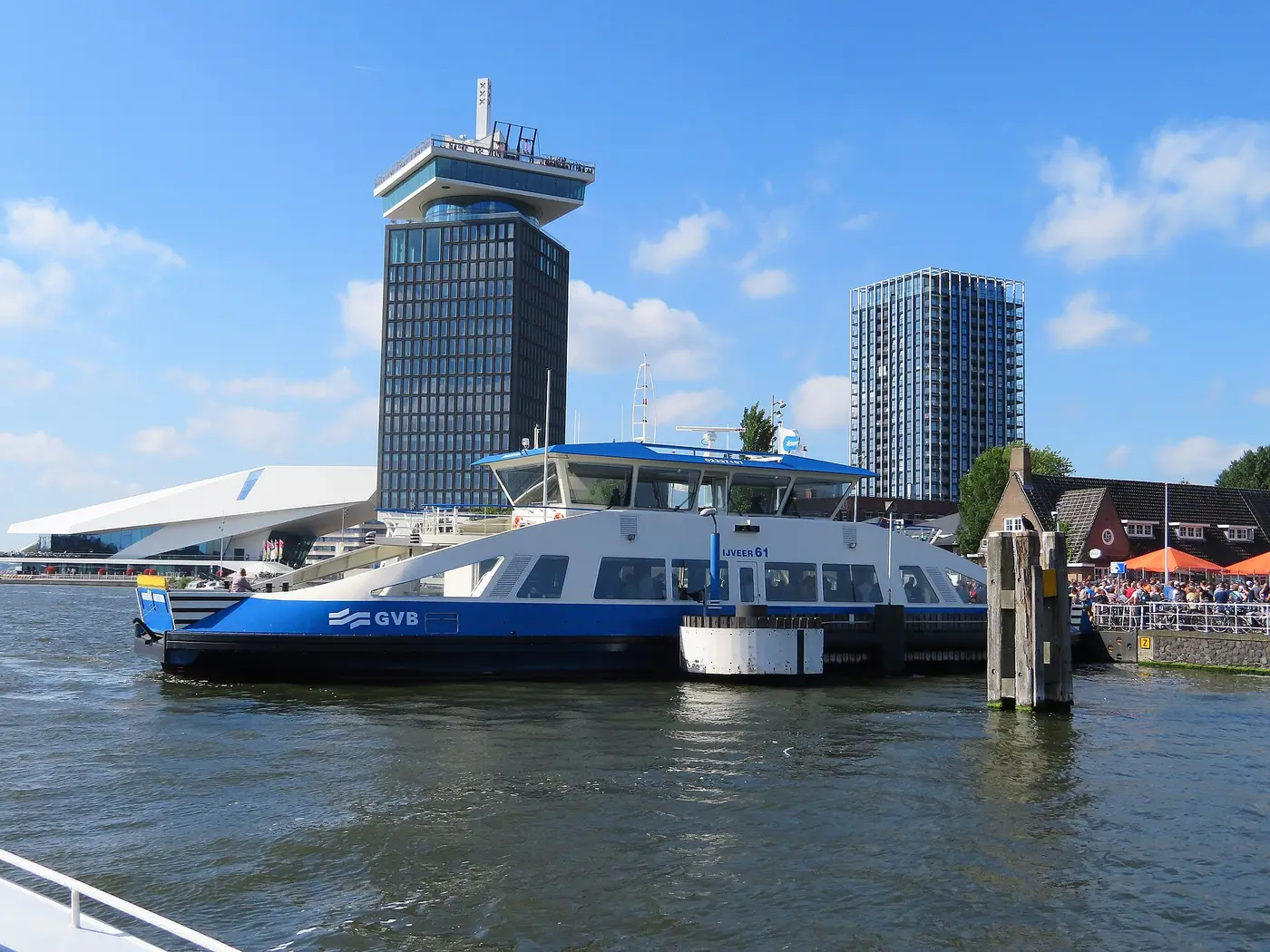
Getting across is free and frequent. GVB’s ferries behind Centraal carry pedestrians and cyclists at no charge; the Buiksloterweg ferry takes 5 minutes and runs day and night, while the NDSM ferry takes 14 minutes. Metro 52 also crosses to Noorderpark and Noord. Every outing starts with a crossing, though, so Noord works best when a bigger room matters more than stepping out onto a canal.
Which areas should you think twice about?
The old centre around De Wallen, the Red Light District, is the closest area to the station, but it is the one part of Amsterdam the city itself is trying to calm down. Its official visitor rules say the centre is a neighbourhood where people live, work and sleep. Bars in the historic centre close at 2 am, sex workers’ premises at 3 am, guided tours of the Red Light District are not permitted, and drinking alcohol or smoking cannabis in the street is forbidden across the city centre. The same city page says police fines for nuisance vary from €100 to €650. If you want to be near the nightlife, stay on the Nieuwmarkt or canal side of it and walk in.
Hotels near Zuid and Sloterdijk stations are a different case. They are business districts with fast rail links, and they make sense for a one-night stop or an early flight, less so for a first visit you want to spend on foot.
How much is the Amsterdam tourist tax on a hotel stay?
In 2026 the tourist tax is 12.5% of the overnight price excluding VAT, the same rate for hotels, hostels, B&Bs, short-stay rentals and campsites. It is a percentage of the room price, not a charge per person, so two people sharing pay the same as one. On 23 September 2026 the city executive published a 2027 budget proposal that sets a single rate of 16% from 2027. The city’s tax pages still showed only the 2026 rate when checked on 17 November 2026, so treat 16% as the planned figure until the 2027 table appears.
| Room price per night, before VAT | Tax per night in 2026 (12.5%) | Three nights in 2026 | Tax per night at 16% | Three nights at 16% |
|---|---|---|---|---|
| €120 | €15.00 | €45.00 | €19.20 | €57.60 |
| €180 | €22.50 | €67.50 | €28.80 | €86.40 |
| €250 | €31.25 | €93.75 | €40.00 | €120.00 |
The room prices are examples to show the sums. Two further points change what you pay. Dutch VAT on hotel stays has been 21% since 1 January 2026, so check that the total you are comparing includes both VAT and tourist tax. And the city’s guidance to hotels says breakfast that is itemised separately on the bill is not taxed, so a breakfast listed as its own line should not carry the tax.
How do you get from Schiphol to each area?
By train for most areas, by bus for the Museum Quarter. Trains from the station under the terminal reach Amsterdam Centraal in 14 to 17 minutes, eight times an hour during the day and less often after 9 pm, and they run through the night. You can tap in and out with a contactless bank card. For De Pijp and the southern canal belt, a direct train to Amsterdam Zuid takes 6 to 7 minutes and metro 52 continues north from there; the whole line from Zuid to Noord takes 15 minutes.
Bus 397 costs from €6.50 one way or €11.75 return, according to its operator Connexxion, and the hourly N97 covers the night. Tram timetables on GVB’s site were valid for only a few weeks at a time when checked on 17 November 2026, so confirm any tram leg in GVB’s planner before you rely on it.
On tickets, the bundle is not the bargain it looks. GVB’s own passes cover trams, metro, buses and ferries but not the airport train: one hour costs €3.40, a day €10 and three days €21.50 in 2026. The Amsterdam Travel Ticket adds the airport train and bus 397 and costs €20, €27 or €34 for one, two or three days. I amsterdam gives the one-way train fare as €4.90, so a three-day GVB pass plus two train tickets comes to €31.30 against €34. From 2027 the hour ticket rises to €3.70 and the day ticket to €10.50.
When should you book, and which dates cost more?
Earlier than for most cities, because supply is fixed. Amsterdam allows a new hotel only when an existing one closes, and since 28 November 2024 a bed stop has barred extra sleeping places. A rate with free cancellation lets you hold a room in your first-choice area while you keep looking, and our guide to finding cheap hotel deals covers the extras to check.
Three sets of dates are worth knowing before you fix yours:
- the Amsterdam Light Festival runs from 26 November 2026 to 17 January 2027, a good reason to visit in the quiet season (our winter city breaks guide compares the alternatives);
- King’s Day is Tuesday 27 April 2027, with King’s Night on the Monday;
- the Amsterdam Marathon is on 30 and 31 October 2027.
Museum tickets shape the trip as much as the hotel. The Anne Frank House sells tickets online only, releasing them every Tuesday at 10 am Central European Time for visits six weeks later. The Van Gogh Museum is also online only, and the Rijksmuseum requires a booked start time. If flights are still open, read when to book flights first.
Leave the car out of it. Street parking in the centre costs €5.37 to €8.05 an hour. If Amsterdam is one stop on a longer drive, collect the car on the day you leave and go through our car rental checklist beforehand. For a second city on the same trip, see where to stay in Paris.
Frequently asked questions
Is it better to stay in the centre of Amsterdam or outside it?
For two or three nights, stay inside or beside the canal belt: the Canal Ring, the Jordaan or the edge of De Pijp. You will walk to most sights and save the time and fares of commuting. For longer stays or tighter budgets, Noord, Oost and Oud-West are 5 to 20 minutes from the centre and usually offer larger rooms.
Can I rent an apartment in Amsterdam instead of a hotel?
Yes, but the supply is small by design. A home may be let to tourists for at most 30 nights a year, to no more than four guests, and it must carry a registration number. In the Jordaan, parts of the canal belt and the Oude Pijp the limit has been 15 nights since 1 April 2026.
Where can I park if I drive to Amsterdam?
Use a Park and Ride site on the edge of the city. The P+R rate is €6 per 24 hours, or €13 for the first 24 hours if you arrive on a weekday before 10 am, for up to 96 hours. The discount applies only if you travel into the centre and back by public transport.
Is Amsterdam Noord too far out for a first visit?
Not in distance: the free Buiksloterweg ferry reaches the back of Centraal Station in 5 minutes and runs day and night. The drawback is rhythm. Every trip starts with a crossing, and the walk from the station to the Jordaan or the museums comes on top, so it suits visitors who want space more than atmosphere.
Sources
- City of Amsterdam: Tourist tax (rates for 2026) (checked 2026-11-17)
- City of Amsterdam: decisions of the College of Mayor and Alderpersons, 23 September 2026 (2027 budget, 16% tourist tax) (checked 2026-11-17)
- City of Amsterdam: tourist tax return guide for accommodation providers (checked 2026-11-17)
- Belastingdienst (Dutch Tax Administration): VAT on accommodation, 21% from 1 January 2026 (checked 2026-11-17)
- City of Amsterdam: hotel policy (hotel stop and bed stop) (checked 2026-11-17)
- City of Amsterdam: rules for holiday rentals (checked 2026-11-17)
- City of Amsterdam: 15-night holiday rental limit in parts of Centrum and De Pijp from 1 April 2026 (checked 2026-11-17)
- City of Amsterdam: How to Amsterdam (visitor rules) (checked 2026-11-17)
- Schiphol: by train to and from the airport (checked 2026-11-17)
- NS: journey planner (Schiphol Airport to Amsterdam Zuid) (checked 2026-11-17)
- Connexxion: Amsterdam Airport Express (bus 397) (checked 2026-11-17)
- GVB: prices for 2026 and 2027 (checked 2026-11-17)
- GVB: Amsterdam Travel Ticket (checked 2026-11-17)
- GVB: metro line 52 timetable (checked 2026-11-17)
- GVB: tram line 2 timetable (checked 2026-11-17)
- GVB: ferries across the IJ (checked 2026-11-17)
- I amsterdam: neighbourhood guides with travel times from the city centre (checked 2026-11-17)
- I amsterdam: how to get from Schiphol Airport to Amsterdam (checked 2026-11-17)
- Anne Frank House: tickets (checked 2026-11-17)
- City of Amsterdam: King's Day 2027 (checked 2026-11-17)
- Amsterdam Light Festival (checked 2026-11-17)
- TCS Amsterdam Marathon (checked 2026-11-17)
- City of Amsterdam: parking tariffs (checked 2026-11-17)
- City of Amsterdam: Park and Ride (P+R) (checked 2026-11-17)